If you’ve spent any time around Spanish speakers, you’ve probably heard someone say “mijo” or “mija.” Maybe a grandmother called out to a child. Maybe a friend used it while joking around. Maybe you heard it in a movie and got curious.
This word shows up everywhere in Latino culture. It’s warm, casual, and a little hard to translate perfectly into English. In this guide, we’ll break down exactly what mijo means, where it comes from, and how to use it correctly in real conversations.
What Does Mijo Mean in Spanish?
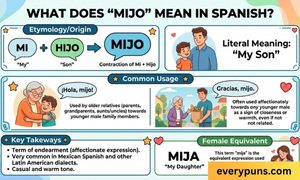
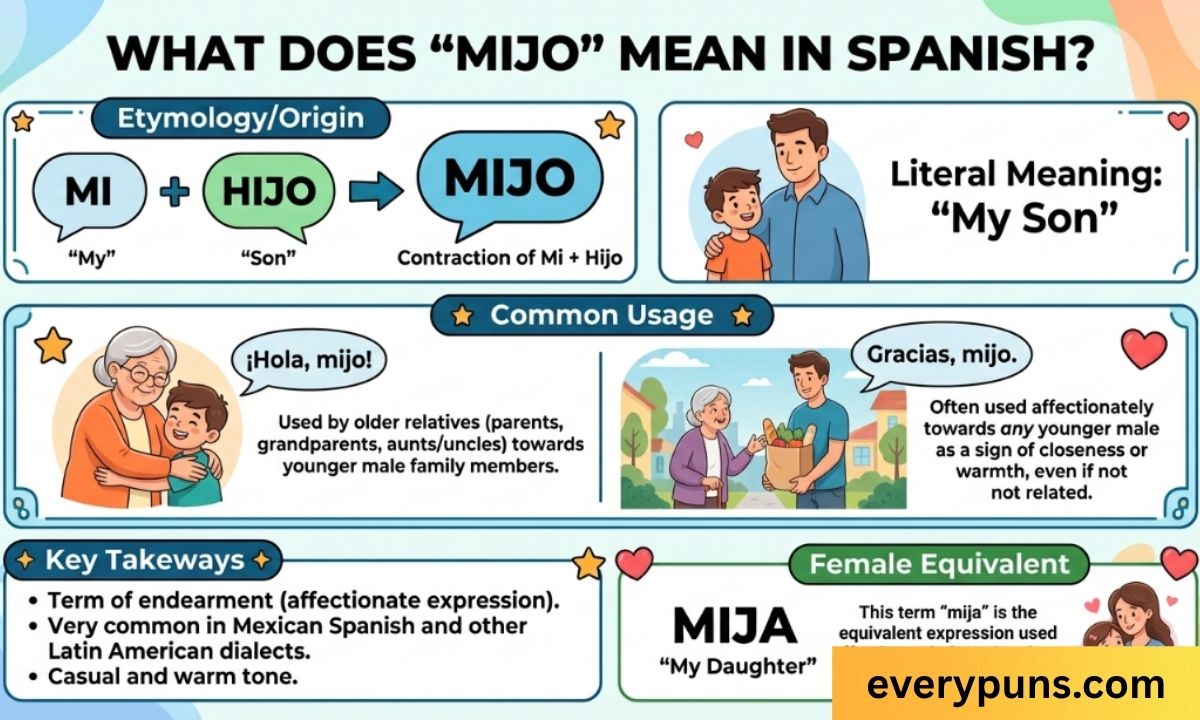
Mijo means “my son” in Spanish. It’s a contraction of two words: mi (my) and hijo (son).
But here’s the twist. Spanish speakers rarely use it to literally mean “my son.” Instead, it works as a term of endearment. Think of it like “honey,” “buddy,” or “sweetie” in English.
People use mijo to speak warmly to:
- Their own children
- Younger relatives or family friends
- Close friends, regardless of age
- Strangers, in a friendly or caring tone
The feminine version, mija, means “my daughter” and works the same way for girls and women.
Also Read This:What Does JFC Mean
The Origin and Meaning of Mijo
Mijo didn’t start as slang. It grew naturally out of everyday speech.
In Spanish, when “mi” (my) sits right before “hijo” (son), the two words blend together in fast speech. Over time, this blend turned into its own standalone word: mijo. Linguists call this kind of merging a contraction, similar to how “do not” becomes “don’t” in English.
This blending is common across Spanish-speaking countries, especially in Mexico and other parts of Latin America. Over generations, mijo stopped being just a shortened phrase. It became a cultural marker of affection, closeness, and respect.
Interestingly, mijo has a second, completely unrelated meaning too. In formal Spanish, mijo also translates to millet, a type of cereal grain used in cooking. Context always makes the meaning clear, since nobody confuses a term of endearment with a grain in conversation.
Mija Meaning in Spanish Slang
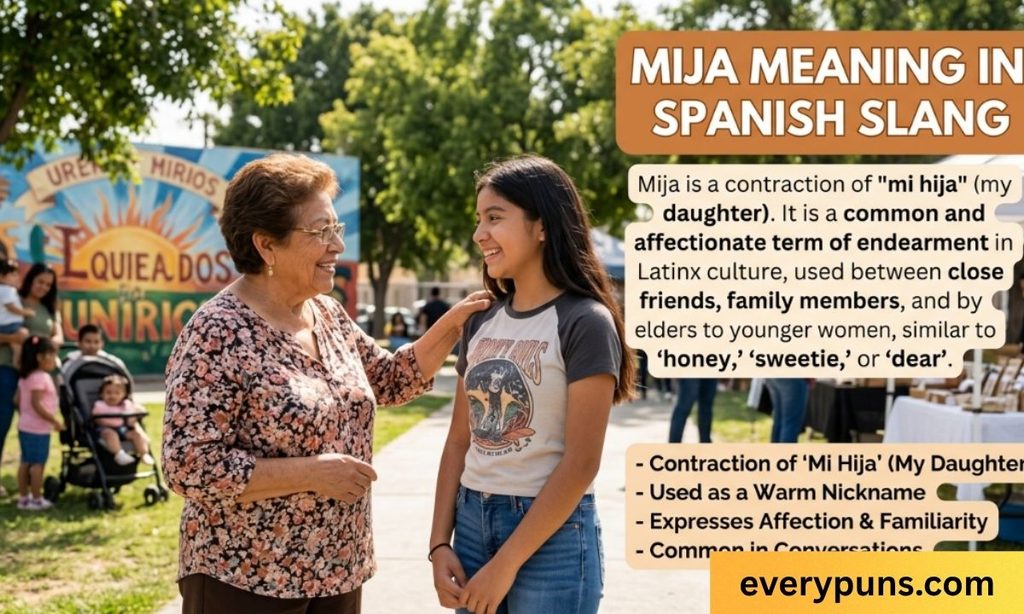
In slang, mija means far more than “my daughter.” It’s used casually between:
- Mothers and daughters
- Older women and younger girls
- Close female friends
- Even strangers, as a polite and warm way to address someone
In slang usage, mija can mean “girl,” “sweetie,” “honey,” or even “dude,” depending on tone and context. It carries warmth, not distance. Many people use it without any age gap at all, just to sound friendly.
How Mijo Is Used in Everyday Conversation
Mijo pops up constantly in daily life, especially in Mexican and Mexican-American households. Here’s where you’ll typically hear it:
- At home: Parents calling their kids in for dinner
- At family gatherings: Grandparents greeting grandchildren
- Among friends: Buddies teasing or comforting each other
- At work: Older coworkers speaking casually to younger staff
- In customer service: Servers or shopkeepers being friendly with customers
The tone matters more than the literal words. Mijo can express love, gentle scolding, comfort, or simple friendliness, all depending on how it’s said.
What Does Mijo Mean in English?
In English, the closest equivalent to mijo is “son,” “buddy,” “honey,” or “sweetheart.” There’s no perfect one-word translation, since English doesn’t have a single term that captures the same warmth and familiarity.
Also Read This:GNG Meaning in Text
Is Mijo a Term of Endearment?
Yes. Mijo is one of the most common terms of endearment in Spanish. It’s used to show affection, warmth, and closeness, not to state a literal family relationship.
You don’t need to be someone’s actual parent to call them mijo. Many people use it with:
- Nieces, nephews, or godchildren
- Young employees or students
- Close friends of any age
- Even pets, in playful settings
This is similar to how someone in English might call a stranger “hon” or “buddy” without meaning it literally.
Mijo Meaning Urban Dictionary
On Urban Dictionary, mijo is generally defined as a casual, affectionate term used toward someone younger or someone close to you. Definitions there often highlight its use among friends as a fun, informal way to say “bro,” “dude,” or “buddy,” beyond just the traditional parent-to-child usage.
Mijo vs. Mi Hijo: What’s the Difference?
Many Spanish learners wonder if mijo and mi hijo mean the same thing. Technically, yes. But there’s a difference in tone and formality.
| Feature | Mi Hijo | Mijo |
| Meaning | My son (literal) | My son (affectionate/contracted) |
| Formality | More formal or neutral | Casual and colloquial |
| Common Use | Talking about your actual son | Addressing someone warmly |
| Region | Used universally in Spanish | Especially common in Mexico & Latin America |
| Feminine Form | Mi hija | Mija |
In short, “mi hijo” is the full, grammatically standard phrase. “Mijo” is the relaxed, spoken version people use in daily conversation. You’ll rarely see “mijo” in formal writing, but you’ll hear it constantly in real life.
Meaning of the Name Mija in Korean

Mija is also a Korean given name, unrelated to the Spanish word. In Korean, it’s typically pronounced “mee-jah” and is used as a feminine first name. It gained wider recognition internationally through the character Mija in the 2017 film “Okja.” This is simply a coincidence in sound between two unrelated languages, Spanish and Korean.
Examples of Mijo in Spanish Sentences
Seeing mijo in context makes it much easier to understand. Here are some common examples:
- “Ven aquí, mijo.”
“Come here, son.” - “¿Cómo estás, mijo?”
“How are you, buddy?” - “No te preocupes, mijo, todo va a estar bien.”
“Don’t worry, honey, everything will be fine.” - “Mijo, ayúdame con esto.”
“Son, help me with this.” - “Gracias, mijo, eres muy amable.”
“Thanks, sweetie, you’re very kind.”
And for the feminine form, mija:
- “Mija, ¿ya comiste?”
“Sweetie, have you eaten yet?” - “Cuídate mucho, mija.”
“Take care, honey.”
What Does Mija Mean in Hindi?
Mija has no native meaning in Hindi. It’s not a Hindi word. Any resemblance to Hindi vocabulary is coincidental, since mija originates from Spanish, not from any Indian language.
Also Read This:FML Meaning in Text
What Does Mijo Mean in Different Contexts?
Context changes everything with mijo. Here’s a quick breakdown:
| Context | Meaning of Mijo |
| Parent to child | My son, expressing love |
| Grandparent to grandchild | Affectionate greeting |
| Friend to friend | Buddy, dude, pal |
| Stranger to stranger | Friendly, respectful warmth |
| Teacher to student | Gentle, caring tone |
| Sarcastic or scolding tone | Mild frustration, still affectionate underneath |
This flexibility is exactly why mijo feels so natural in Spanish. One small word adapts to dozens of emotional situations.
Is Mijo Used for Boys and Girls?
Mijo is specifically the masculine form, used for boys and men. The feminine form is mija, used for girls and women.
Quick reference:
Mijo
for a male (“my son,” “buddy,” “kid”)
Mija
for a female (“my daughter,” “sweetie,” “girl”)
If you’re unsure which one to use, match it to the gender of the person you’re speaking to, not the speaker.
Frequently Asked Questions
What does mijo literally mean?
Mijo literally means “my son,” combining “mi” (my) and “hijo” (son).
Is mijo only used for actual sons?
No. It’s commonly used as a friendly term for anyone younger or close to you, regardless of blood relation.
What’s the feminine version of mijo?
The feminine version is mija, meaning “my daughter.”
Is mijo used in Spain or only Latin America?
It’s used across the Spanish-speaking world but is especially common in Mexico and Mexican-American communities.
Can mijo be used sarcastically?
Yes. It can express mild frustration or gentle scolding while still sounding affectionate.
Does mijo mean anything else?
Yes. Formally, “mijo” also translates to “millet,” a type of grain, though this meaning is unrelated to its use as a term of endearment.
Is it rude to call someone mijo if you’re not related?
No. It’s generally seen as warm and respectful, not rude, especially from older speakers to younger ones.
How do you pronounce mijo?
It’s pronounced “MEE-hoh.”
Final Thoughts
Mijo is more than a simple Spanish word. It carries warmth, culture, and connection in every use. Whether it’s a parent speaking to a child, a friend joking around, or a stranger being kind, mijo brings people closer together.
Next time you hear someone say “mijo” or “mija,” you’ll know it’s not just about family. It’s about affection, familiarity, and the easy warmth that runs through everyday Spanish conversation.