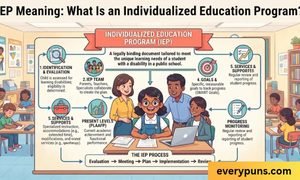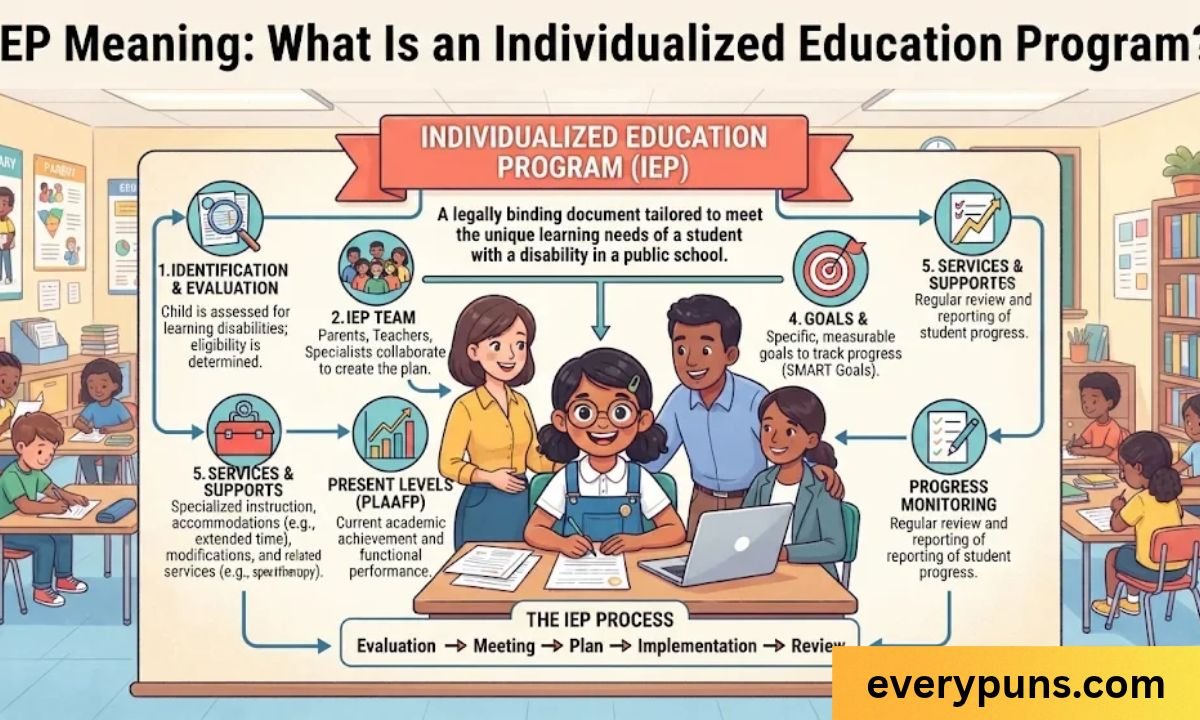
IEP meaning is simple. IEP stands for Individualized Education Program. It is a written plan for a student with a disability. The plan lists goals, supports, and services the school must provide.
This guide explains the IEP meaning in plain English. You will learn who qualifies, what goes into the document, and how the process works. You will also see how an IEP differs from a 504 plan and how to ask for one.
What Does IEP Stand For in Education?
IEP stands for Individualized Education Program. Some schools say “Individualized Education Plan.” Both names mean the same thing.
The term comes from a U.S. law called the Individuals with Disabilities Education Act (IDEA). This law says public schools must support eligible students with disabilities. The IEP is the tool that makes it happen.
Let’s break the name into three parts:
- Individualized: The plan is built for one child. No two IEPs are the same.
- Education: The plan focuses on learning and school life.
- Program: The plan is both a document and a set of services.
ALSO READ THIS:DEI Meaning
IEP Meaning in English
In plain English, an IEP is a custom learning plan. It tells the school what help a child needs and how that help will be given. It also sets goals and shows how progress will be checked.
IEP Meaning Explained: A Simple Definition for Parents
Here is a simple definition. An IEP is a legal document that lays out the special education services a child will get. It is written by a team that includes parents.
Think of it as a roadmap. It shows where your child is now. It shows where the team wants your child to go. And it shows how the school will help them get there.
An IEP is more than paperwork. It is legally binding. The school must follow it.
What Does IEP Mean in School?
In school, an IEP means a student gets specialized support. That support can include extra teaching, therapy, or classroom changes. It lasts as long as the child is eligible.
Teachers use the IEP every day. It guides how they teach, test, and support the student.
ALSO READ THIS:AFK Meaning
Does Having an IEP Mean You Are Special Needs?
Not in the way many people think. An IEP means a child has a disability that affects learning. It does not define the child.
Many students with IEPs are bright and capable. They just learn differently. A child with dyslexia, ADHD, or a speech delay can have an IEP and do very well in school.
The term “special needs” is broad. It can cover many conditions. An IEP is a specific school document. It only applies to education.
An IEP is not a label to fear. It is a way to get the right help.
Who Qualifies for an Individualized Education Program?
A child must meet a two-part test to get an IEP:
- The child has a disability that fits one of the categories listed in IDEA.
- The disability affects school performance, and the child needs specially designed instruction.
Both parts matter. A diagnosis alone is not enough. The school must also find that the child needs special education to make progress.
IEPs cover students from preschool through high school. In many states, services can continue until age 21 or until the student earns a regular diploma.
ALSO READ THIS:IMY Meaning
The 13 Disability Categories Under IDEA
IDEA lists 13 categories. Here they are:
- Autism
- Deaf-blindness
- Deafness
- Emotional disturbance
- Hearing impairment
- Intellectual disability
- Multiple disabilities
- Orthopedic impairment
- Other health impairment (includes ADHD)
- Specific learning disability (such as dyslexia)
- Speech or language impairment
- Traumatic brain injury
- Visual impairment (including blindness)
States use their own definitions within this federal frame. So eligibility rules can vary a little from state to state.
What Qualifies a Child for an IEP?
Several things come together:
- A full evaluation by the school
- A finding that the child fits one of the 13 categories
- Proof that the disability hurts learning or school participation
- A need for specially designed instruction
The most common categories are specific learning disability, other health impairment, speech or language impairment, and autism.
Some children struggle in school but do not qualify. In that case, a 504 plan may be a better fit. More on that below.
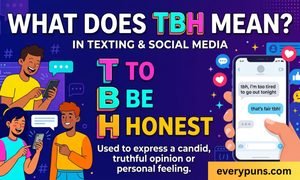
ALSO READ THIS:TBH Meaning
What Is Included in an IEP Document?
Every IEP follows a similar structure. The details change for each child. Federal law requires certain parts.
| IEP Section | What It Tells You |
|---|---|
| Present levels of performance | How the child is doing right now in school |
| Annual goals | What the child should learn in one year |
| Special education services | The extra instruction the school will provide |
| Related services | Help such as speech therapy or counseling |
| Accommodations and modifications | Changes to how the child learns or is tested |
| Participation with peers | How much time the child spends in general classes |
| Testing details | Any changes to state or district tests |
| Service dates | When services start, how often, and for how long |
| Progress reporting | How and when the school will share progress |
| Transition plan | Planning for life after school, usually starting by age 16 |
Accommodations vs. Modifications
These two words sound alike. They are not the same.
- Accommodations change how a child learns. Examples include extra time or a quiet testing room.
- Modifications change what a child is expected to learn. For example, shorter or simpler assignments.
Ask the team which one is being used. It matters for grades and diplomas.
ALSO READ THIS:IYKYK Meaning: What Does IYKYK Mean in Text
How Does an IEP Work in Schools?
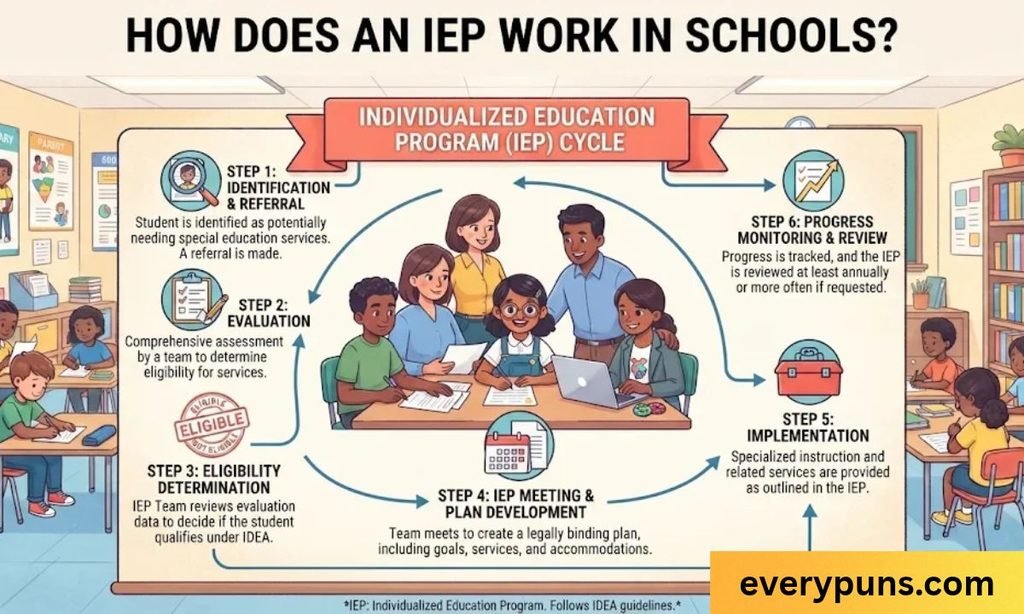
The IEP process has clear steps. Here is how it usually goes.
- Referral. A parent, teacher, or doctor raises a concern.
- Evaluation. The school tests the child in all areas of suspected need. Parents must give written consent first.
- Eligibility meeting. The team decides if the child qualifies.
- IEP meeting. The team writes the plan together.
- Services begin. The school delivers the supports in the IEP.
- Progress checks. The school tracks goals and reports to parents.
- Annual review. The team meets at least once a year to update the plan.
- Re-evaluation. The school looks again at eligibility at least every three years.
Who Is on the IEP Team?
The team usually includes:
- The parents or guardians
- At least one general education teacher
- At least one special education teacher
- A school representative who can commit resources
- Someone who can explain evaluation results
- The student, when appropriate (especially in high school)
Parents are equal members. Your voice counts. You can also bring an advocate or a friend.
ALSO READ THIS:YOLO Meaning
What Are Your Rights as a Parent?
IDEA gives parents strong rights. You can:
- Give or refuse consent for evaluation
- Get a copy of the evaluation report
- Ask for an independent evaluation if you disagree
- Request an IEP meeting at any time
- Disagree and use dispute options such as mediation or a due process hearing
IEP vs. 504 Plan: What’s the Difference?
Both plans help students with disabilities. But they work in different ways.
| Feature | IEP | 504 Plan |
|---|---|---|
| Law | IDEA | Section 504 of the Rehabilitation Act |
| Main purpose | Specialized instruction and services | Accommodations for equal access |
| Eligibility | Must fit one of 13 categories and need special education | Any disability that limits a major life activity |
| Evaluation | Full, formal evaluation required | Less formal review |
| Written plan | Detailed, with measurable goals | Usually a shorter list of supports |
| Parent rights | Extensive procedural safeguards | Fewer formal protections |
| Review | At least once a year | Reviewed on a set schedule, often yearly |
A simple way to remember it: an IEP changes what and how a child is taught. A 504 plan changes the setting so the child can access the same lessons.
Some students need only a 504 plan. For example, a child with diabetes may need snack breaks and nurse access but no special instruction.
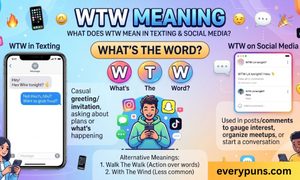
ALSO READ THIS:WTW Meaning
How to Request an IEP for Your Child
You do not need to wait for the school to act. Parents can ask for an evaluation at any time.
Step-by-Step: Requesting an IEP Evaluation
- Write down your concerns. Note struggles with reading, focus, behavior, speech, or anything else.
- Collect records. Gather report cards, test scores, teacher emails, and doctor notes.
- Send a written request. Address it to the principal or special education director. Ask for a full evaluation for special education services under IDEA.
- Keep a copy. Save proof of the date you sent it.
- Give consent. The school will send a form. Sign it to start testing.
- Watch the timeline. Federal law sets a 60-day window after consent in most cases. Many states set their own deadlines.
- Attend the eligibility meeting. Ask questions. Ask for the report in advance if you can.
What If the School Says No?
Schools must give you a written reason. You then have options:
- Ask for a meeting to talk it through
- Request mediation
- File a state complaint
- Ask for a due process hearing
- Get a private evaluation and share it with the school
Stay calm and keep records. Written notes help if there is a dispute.
IEP Meaning in Other Contexts (Business, Finance, and More)
IEP also appears in other fields. The meaning changes with the context.
| Field | What IEP Means |
|---|---|
| Education | Individualized Education Program |
| Health insurance | Initial Enrollment Period (for Medicare sign-up) |
| College | Intensive English Program for international students |
| Stock markets | Indicative Equilibrium Price in opening auctions |
| Employment services | Individual Employment Plan |
In schools, the first meaning is by far the most common. If you see IEP in a school email, it almost always means the Individualized Education Program.
Frequently Asked Questions About IEPs
What is the IEP meaning in school?
It means Individualized Education Program. It is a written plan of special education support for a student with a disability.
Is an IEP a disability?
No. An IEP is a plan, not a condition. It supports students who have a qualifying disability.
Can a child with ADHD get an IEP?
Yes. ADHD often falls under “other health impairment.” The child must also need special education to qualify.
What is the difference between an IEP and a 504 plan?
An IEP provides specialized instruction. A 504 plan provides accommodations so a child can access regular classes.
Does an IEP go on a transcript?
No. IEPs are private education records. They do not appear on a standard transcript.
How long does it take to get an IEP?
The evaluation usually must finish within 60 days of consent. State timelines can differ.
Who can request an IEP evaluation?
Parents, teachers, doctors, and school staff can all ask. Parents can request one at any time.
Can parents refuse an IEP?
Yes. Parents can refuse consent for services. The school cannot start special education without it.
How often is an IEP reviewed?
At least once a year. A full re-evaluation happens at least every three years.
Does an IEP last forever?
No. It lasts while the child is eligible. It ends at graduation, at the state’s age limit, or if the child no longer needs services.
Do IEPs apply in college?
No. IEPs end after high school. Colleges offer accommodations through disability services offices instead.
Does an IEP hold a child back?
No. An IEP is meant to remove barriers. Many students with IEPs go on to college and careers.
What does IEP stand for in business or finance?
It can mean different things, such as Indicative Equilibrium Price in trading. The school meaning is the most common.
Conclusion
Now you know the IEP meaning. IEP stands for Individualized Education Program. It is a legal, written plan that gives students with disabilities the support they need to learn.
To qualify, a child must fit one of 13 IDEA categories and need specialized instruction. The plan includes goals, services, and accommodations. It is reviewed every year.
If you think your child needs help, put your request in writing. Gather your records. Stay involved in every meeting. You know your child best, and the team needs your input.
An IEP is not a label. It is a tool. Used well, it helps a child grow in confidence and skill.

Adeline is the founder of everypuns.com, a creative space dedicated to puns, humor, and clever wordplay. She enjoys transforming everyday language into something fun, witty, and memorable. With a passion for creativity and a love for laughter, Adeline aims to make words more playful and bring a smile to every reader.