You have probably seen the term DEI mean at work or in the news. But many people still ask what it really means. Let’s clear that up in simple words.
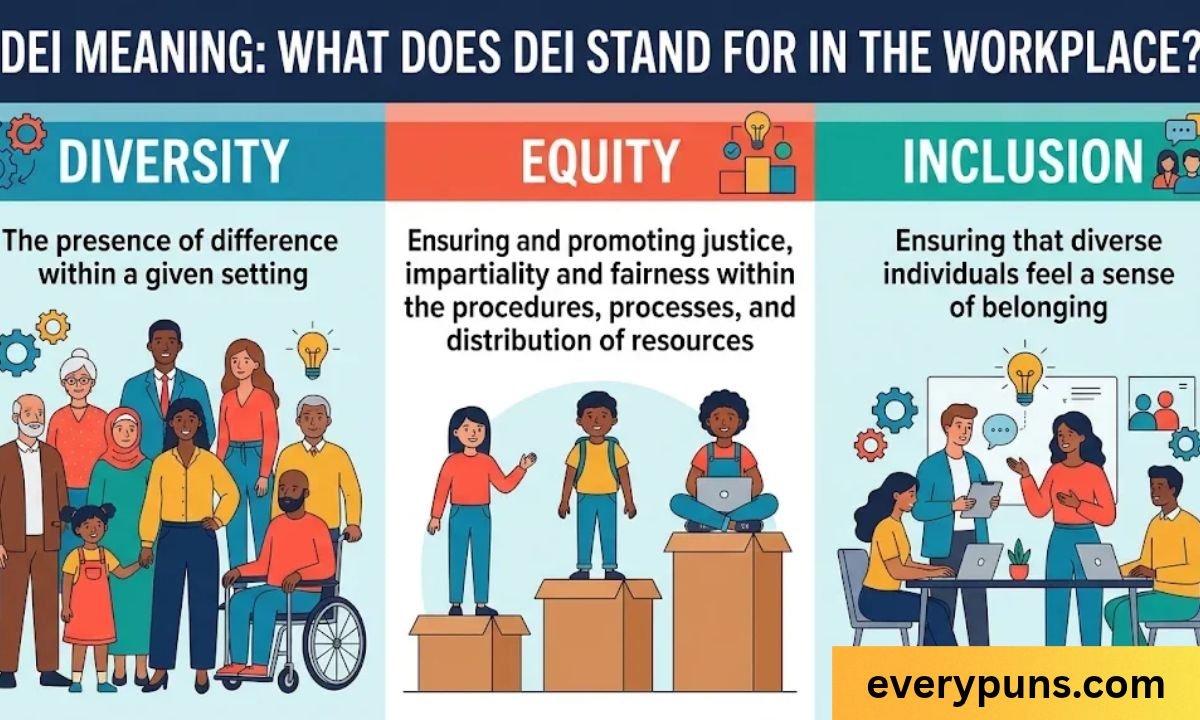
DEI stands for diversity, equity, and inclusion. Diversity is about the mix of people on a team. Equity means fair access, and inclusion means everyone feels they belong.
In the workplace, DEI shapes hiring, pay, and company culture. Some people support it, and others question it. This guide explains the DEI meaning, how it works, and why it matters.
What Does DEI Stand For?
DEI stands for Diversity, Equity, and Inclusion.
- Diversity: the mix of people in a group.
- Equity: fair access and fair treatment.
- Inclusion: a real sense of belonging.
Some organizations use related terms:
- DEIB adds “belonging.”
- D&I drops “equity.”
- EDI puts equity first. It is common in the UK and Canada.
Understanding Diversity, Equity, and Inclusion
The three words are linked, but they are not the same. Here is a quick comparison.
| Term | Simple meaning | Workplace example |
|---|---|---|
| Diversity | Who is in the room | Hiring people of different ages, genders, cultures, abilities, and backgrounds |
| Equity | Who gets fair access | Reviewing pay data to fix unfair gaps |
| Inclusion | Who feels heard | Inviting every team member to share ideas in meetings |
What Is Diversity?
Diversity means differences among people. These include race, gender, age, religion, disability, language, education, and life experience.
What Is Equity?
Equity means giving people what they need to succeed. It is not the same as equality. Equality gives everyone the same thing. Equity looks at needs and removes barriers.
What Is Inclusion?
Inclusion means people feel respected and valued. A team can be diverse on paper and still feel closed. Inclusion fixes that.
ALSO READ THIS:TBH Meaning
What Is the Purpose of DEI?
The purpose of DEI is to build workplaces where people get fair chances and can do their best work.
Most DEI programs aim to:
- Widen the talent pool.
- Reduce bias in hiring and promotion.
- Close pay and opportunity gaps.
- Improve belonging and retention.
- Reflect the customers and communities a company serves.
How Does DEI Work in the Workplace?
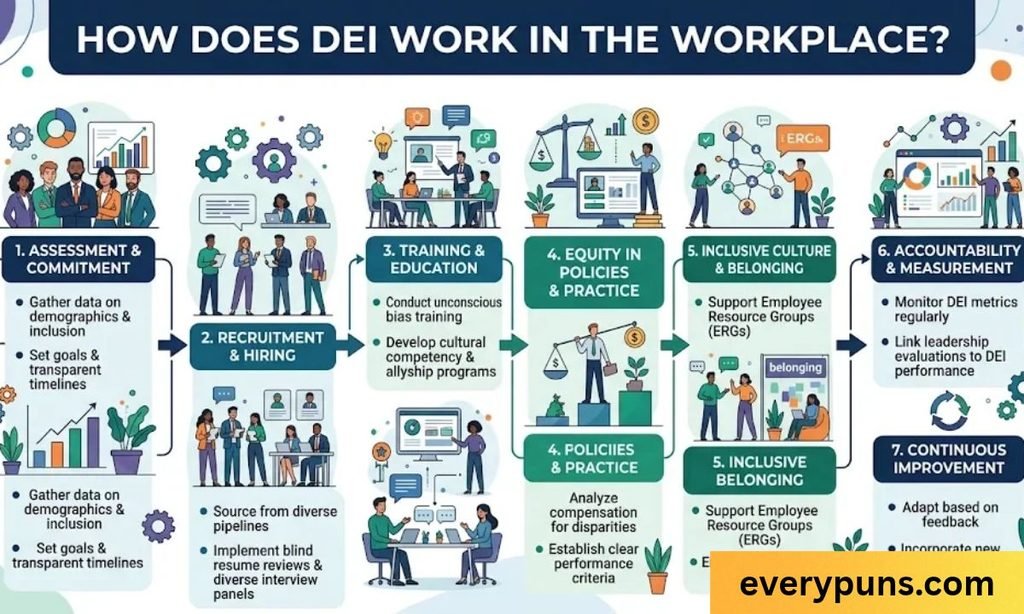
DEI works through policies, programs, and daily habits. It usually starts with data. Companies look at hiring, pay, promotion, and exit rates. Then they set goals and track progress.
Common steps include:
- Assess: run surveys and review workforce data.
- Set goals: make them clear and measurable.
- Get leadership buy-in: leaders must model the behavior.
- Take action: update hiring, training, and policies.
- Measure and adjust: check results and improve.
ALSO READ THIS :IYKYK Meaning
What Does Someone Being “DEI” Mean?
You may hear people say someone “is DEI” or a “DEI hire.” This is slang, and it is often used as an insult. It suggests the person was hired for their identity rather than their skills.
That claim is a stereotype. It is not a fair way to judge anyone’s qualifications. In its original sense, DEI is about fair hiring processes and wider outreach, not lower standards. The phrase is also politically charged, so many professionals avoid it.
Why Is DEI Important in Organizations?
DEI matters because people do better when they feel fairly treated. Organizations that take it seriously often see:
- Stronger employee engagement
- Better retention
- A wider range of ideas and viewpoints
- A better reputation with job seekers and customers
Supporters also say DEI helps teams spot blind spots and solve problems from more angles. Results vary by company, and outcomes depend on how well programs are designed.
ALSO READ THIS:YOLO Meaning
Common Examples of DEI in Everyday Life
DEI is not only a corporate topic. You can see it in daily life:
- Ramps and captions that make spaces and videos accessible
- Flexible schedules for caregivers and religious holidays
- Blind resume reviews that hide names and photos
- Mentorship programs that support early-career staff
- Employee resource groups (ERGs) where people with shared experiences connect
- Gender-neutral restrooms and inclusive forms
- Translated materials for multilingual communities
DEI Meaning in Business and Education
DEI in Business
In companies, DEI shapes hiring, pay, promotion, supplier choices, and workplace culture. Many firms have DEI leaders, ERGs, and inclusion training.
DEI in Education
In schools and universities, DEI covers admissions outreach, accessible classrooms, support for first-generation students, and inclusive teaching. It also covers fair discipline and diverse learning materials.
DEI is also a debated topic in both settings. Laws and policies differ by country and state, and they have changed fast in recent years. Always check current rules where you live or work.
ALSO READ THIS:WTW Meaning
What Are the Core Principles of DEI?
Most DEI frameworks rest on these ideas:
- Fairness: people are treated justly.
- Respect: differences are valued.
- Access: barriers are identified and removed.
- Belonging: everyone can participate.
- Accountability: leaders track results and own them.
- Continuous learning: policies improve over time.
Benefits of Diversity, Equity, and Inclusion
When done well, DEI can bring benefits for both people and organizations.
| For employees | For organizations |
|---|---|
| Stronger sense of belonging | Better retention |
| Fairer chances to grow | Wider talent pool |
| More voice at work | More creative problem-solving |
| Better wellbeing | Stronger employer brand |
Common Misconceptions About DEI
Myth 1: DEI means quotas.
Not by definition. Most DEI work focuses on outreach, fair processes, and removing bias.
Myth 2: DEI lowers standards.
Fair hiring aims to find qualified people who might otherwise be missed.
Myth 3: DEI is only about race or gender.
It also covers age, disability, neurodiversity, religion, language, and more.
Myth 4: DEI is just training.
A one-time workshop is not enough. Real DEI needs policy, data, and leadership action.
Myth 5: Equity means equal outcomes for all.
Equity is about fair access and support, not guaranteed results.
ALSO READ THIS:WYO Meaning in Text
How Is DEI mean Different From EEO mean?
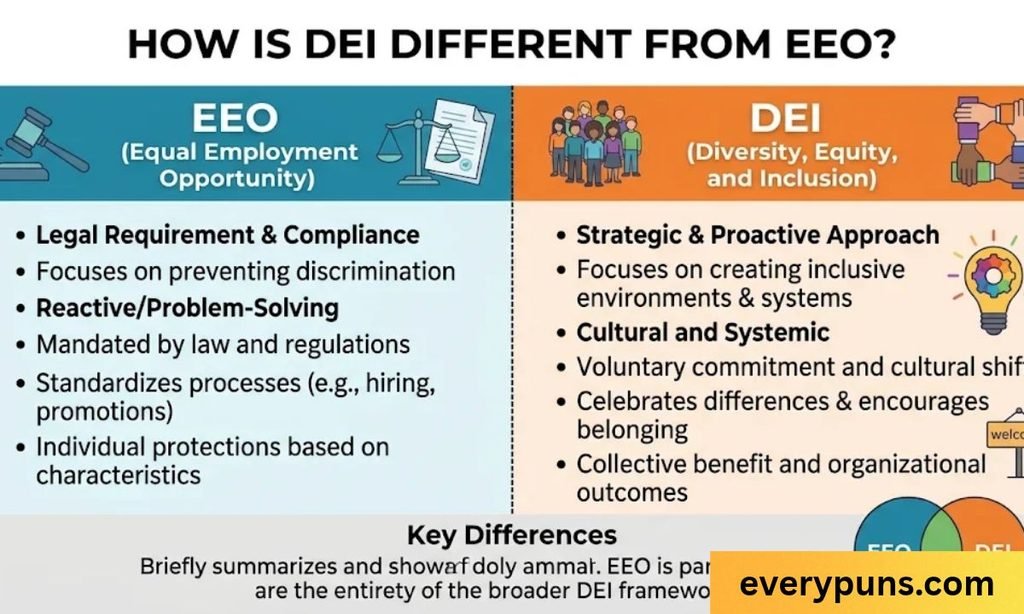
EEO stands for Equal Employment Opportunity. It is a legal requirement in many countries. DEI is mostly a voluntary organizational strategy.
| Feature | EEO | DEI |
|---|---|---|
| Basis | Law | Company strategy and values |
| Main goal | Prevent unlawful discrimination | Build a fair, welcoming culture |
| Focus | Compliance | Culture, outreach, belonging |
| Required? | Yes | Generally no |
| Example | Equal pay and anti-harassment rules | Mentorship, ERGs, inclusive hiring outreach |
In short, EEO sets the legal floor. DEI tries to build above it. Employers must still follow anti-discrimination law whether or not they run DEI programs.
What Are Some Challenges of Implementing DEI?
DEI is hard to do well. Common problems include:
- Lack of leadership support: programs fade without it.
- Box-ticking: actions that look good but change little.
- Unclear goals: no way to measure success.
- Employee pushback: some staff see DEI as unfair or confusing.
- Legal uncertainty: rules vary by region and keep changing.
- Limited budget and time: DEI is often the first thing cut.
- Weak follow-through: surveys are run but results are ignored.
How to overcome them:
- Set clear, measurable goals.
- Explain the “why” in plain language.
- Get legal advice on program design.
- Include all employees in the conversation.
- Report progress honestly.
ALSO READ THIS:HWY Meaning in Text
Frequently Asked Questions About DEI
What does DEI stand for?
DEI stands for diversity, equity, and inclusion.
What is DEI in simple words?
It means treating people fairly, valuing differences, and making everyone feel they belong.
What is the difference between equity and equality?
Equality gives everyone the same resources. Equity gives people what they need to reach a fair outcome.
What does DEI hire mean?
It is a slang term, often negative, for someone said to be hired because of identity. It is a stereotype, not a fair measure of skill.
Is DEI illegal?
No law bans the idea of DEI as a whole. But some practices, such as hiring based on protected traits, can break the law, and rules differ by place. Check with a legal expert.
What is the difference between DEI and DEIB?
DEIB adds “belonging” to stress that people should feel truly accepted.
What is an example of DEI at work?
Reviewing pay data to close unfair gaps is a common example.
Who is responsible for DEI in a company?
Leaders and HR usually guide it, but every employee plays a part.
What does Agnus Dei mean in English?
It is Latin for “Lamb of God” and is unrelated to workplace DEI.
Does DEI work?
It can, when it uses clear goals, real data, and strong leadership. Poorly designed programs often fall short.
Conclusion
DEI stands for diversity, equity, and inclusion. Diversity is about who is present, equity is about fair access, and inclusion is about belonging. Together, they aim to build fairer, stronger workplaces.
The topic is also debated, and laws are changing. The best approach is to understand the terms, follow the law, and focus on practical steps that treat people fairly.

Adeline is the founder of everypuns.com, a creative space dedicated to puns, humor, and clever wordplay. She enjoys transforming everyday language into something fun, witty, and memorable. With a passion for creativity and a love for laughter, Adeline aims to make words more playful and bring a smile to every reader.





1 thought on “DEI Meaning: What Does DEI Stand For in the Workplace?”